
Discover what a patient-specific reference looks like for your next cases.
Rebrain is partnering with leading international DBS and lesioning therapy centers to deliver more precise, personalized, and profitable care for every patient (FDA & CE cleared).
Published clinical experience in surgical workflows
Deep Brain Stimulation

Standardized technique
Efficient workflow
& quick learning curve

More confident planning
For seasoned and emerging surgeons alike

Reduce revisions and OR time
Improving overall surgical efficiency

PROBAVIM Study
Prediction of Clinical DBS Target
for Essential Tremor (2021)
PARKEO Study
Asleep versus Awake
STN DBS for Parkinson’s Disease (2020)
%
Median improvement in tremor scores 9 patients (FR)
%
improvement with asleep surgery 29 patients (FR)
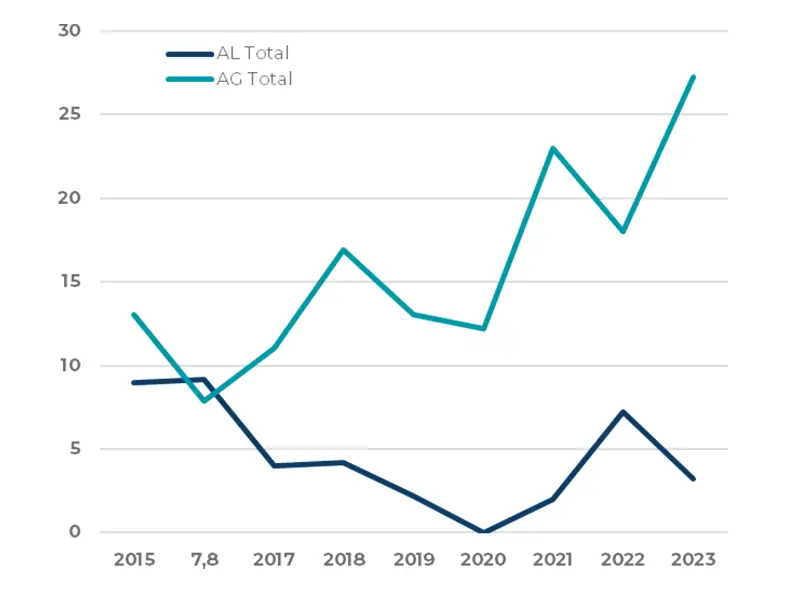
Variation between awake procedures (AL) and those performed under general anesthesia (GA).
We observed that the average procedure time for surgery with local anesthesia and microelectrode recording (LA/MER) is decreased by 47%+, from 6 hours and 20 minutes to 3 hours and 20 minutes using RebrAln targeting under general anesthesia.
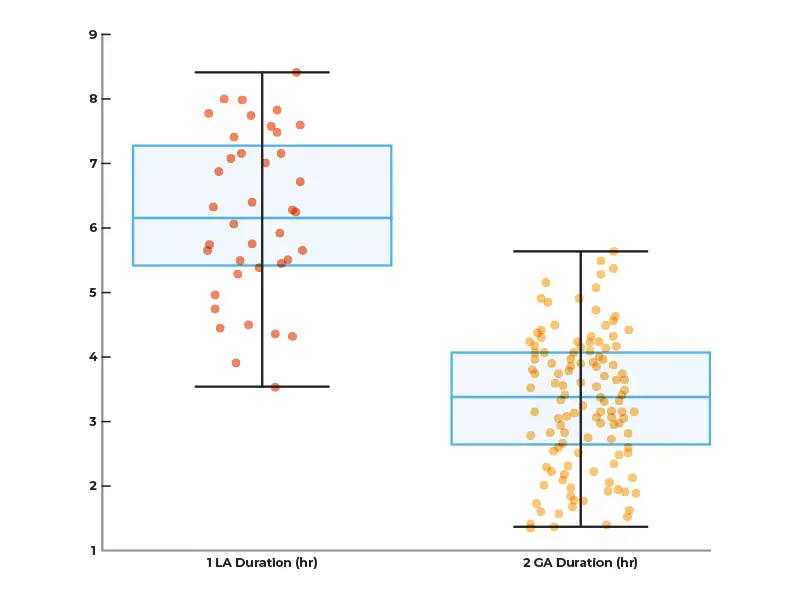
Comparison of surgery duration under local and general anesthesia
Improving DBS precision
through advanced neuroimaging software (2023)
- The choice of segmentation tool can significantly influence the accuracy of anatomical targeting.
- Differences may lead to variations in the final localization of DBS targets.
- Data-driven VIM and STN targets (Rebrain) consistently align with the most effective anatomy (<1mm).

Consistent targeting
across centers

Improved surgical
precision

Reproducible
clinical outcomes
OPTIVIM Study
Data-guided DBS for
Essential Tremor (2025)
A Phase 2 clinical study evaluating Rebrain approach to DBS for essential tremor, powered by real-world outcomes and MRI-based targeting. This innovative procedure eliminates the need for intraoperative testing by using a mathematic-model to precisely define optimal stimulation targets before surgery.
Why it matters
This approach demonstrates how data-driven targeting can transform neurosurgery, shifting DBS toward a more standardized, faster, and scalable procedure while maintaining high clinical efficacy with the potential to improve access and surgical consistency worldwide.
PARKEO2 Study
Data-guided DBS for Parkinson’s Disease
(Ongoing 2026)
This national multicenter clinical trial, sponsored by the CHU de Bordeaux in collaboration with 8 expert neurosurgical centers across France, evaluates two DBS targeting strategies for patients with Parkinson’s disease.
The trial includes 128 patients, diagnosed with idiopathic Parkinson’s disease and experiencing motor fluctuations despite optimized medical treatment.
The study compares, over a 12-month follow-up period, the motor outcomes of STN DBS performed using either a standard procedure with intraoperative MER or an Rebrain “Asleep” approach without MER, based on simplified imaging-guided targeting. Clinical efficacy is assessed at 1 year using the UPDRS-III motor score.
The study also evaluates surgical accuracy, operative parameters, peri- and postoperative complications, cognitive outcomes, medication reduction, and overall healthcare costs, including cost-effectiveness expressed in QALYs.
This research aims to optimize DBS surgical strategies and contribute to improving the safety, efficiency, and accessibility of advanced treatment for patients with Parkinson’s disease.
Published clinical experience in surgical workflows
Lesioning – HIFU & SRS
Safer and faster
procedures
Minimizing risks and reducing intra-procedural adjustments for a smoother, more efficient workflow
Confident, data-driven targeting
Empowering neurosurgeons with precise, individualized planning
Asymmetric
brain treatment
Optimizing treatment by leveraging patient-specific anatomical and functional differences
Clinical evidence

PRE HIFU Study
Expected in 2026
A Phase 2 clinical study evaluating Rebrain approach to DBS for essential tremor, powered by real-world outcomes and MRI-based targeting.
This innovative procedure eliminates the need for intraoperative testing by using a mathematic-model to precisely define optimal stimulation targets before surgery.
OPTI HIFU Study
Expected in 2028
Optimization of VIM targeting by MRgFUS in severe essential tremor.
Prospective, multicenter, open-label, non-comparative pilot study (pre-pivotal) – 50 patients
Sites: UVA, Charlottesville (USA) + 3 USA sites
OptiRS Study
Expected in 2027
Optimizing VIM Targeting for Radiosurgery in Severe Tremor (OptiRS).
Prospective, randomized, controlled, French monocentric (Marseille), pivotal study – 40 patients
Clinical evidence

Can Rebrain rival Neurosurgeons in Targeting the VIM for Focused Ultrasound Thalamotomy?
UVA, Charlottesville, (US)– Dr Shayan Moosa
11 MRgFUS thalamotomies.
Results: Rebrain consistently targeted a more anterior position wich may reduce long-term sensory side effects, standardize lesion placement, and decrease outcome variability, ultimately improving patient safety.
Comparison between Rebrain and neurosurgeons in targeting the VIM for MRgFUS
Duke University, North Carolina (US) – Dr Nandan Lad
64 patients MRgFUS thalamotomy.
Results: In routine practice, the more sonications the neurosurgeon performs, the closer they get to the Rebrain target.
Validation of the Rebrain Algorithm for Pre-Operative Targeting of the VIM
UCLA, California (US) – Dr Ausaf Bari
161 essential tremor’s and tremor dominant Parkinson Disease’s patients.
Results: Rebrain may improve preoperative planning, reduce testing and time to find the optimal lesion location and minimize patient discomfort.
Rebrain Algorithm for Pre-Operative Targeting of the VIM correlates lesion location with the occurrence of a gait disorder.
UCLA, California (US) – Dr Ausaf Bari
161 essential tremor’s and tremor dominant Parkinson Disease’s patients.
Results: The Rebrain algorithm is effective in correlating the occurrence of gait disturbance after MRgFUS of the VIM in tremor. This study confirms that an inferior and lateral location of the lesion generates an increased risk of gait disturbance.